What is cross-chain? Why does it come with a service fee?
Why paying from one chain and settling on another triggers a transparent cross-chain fee.
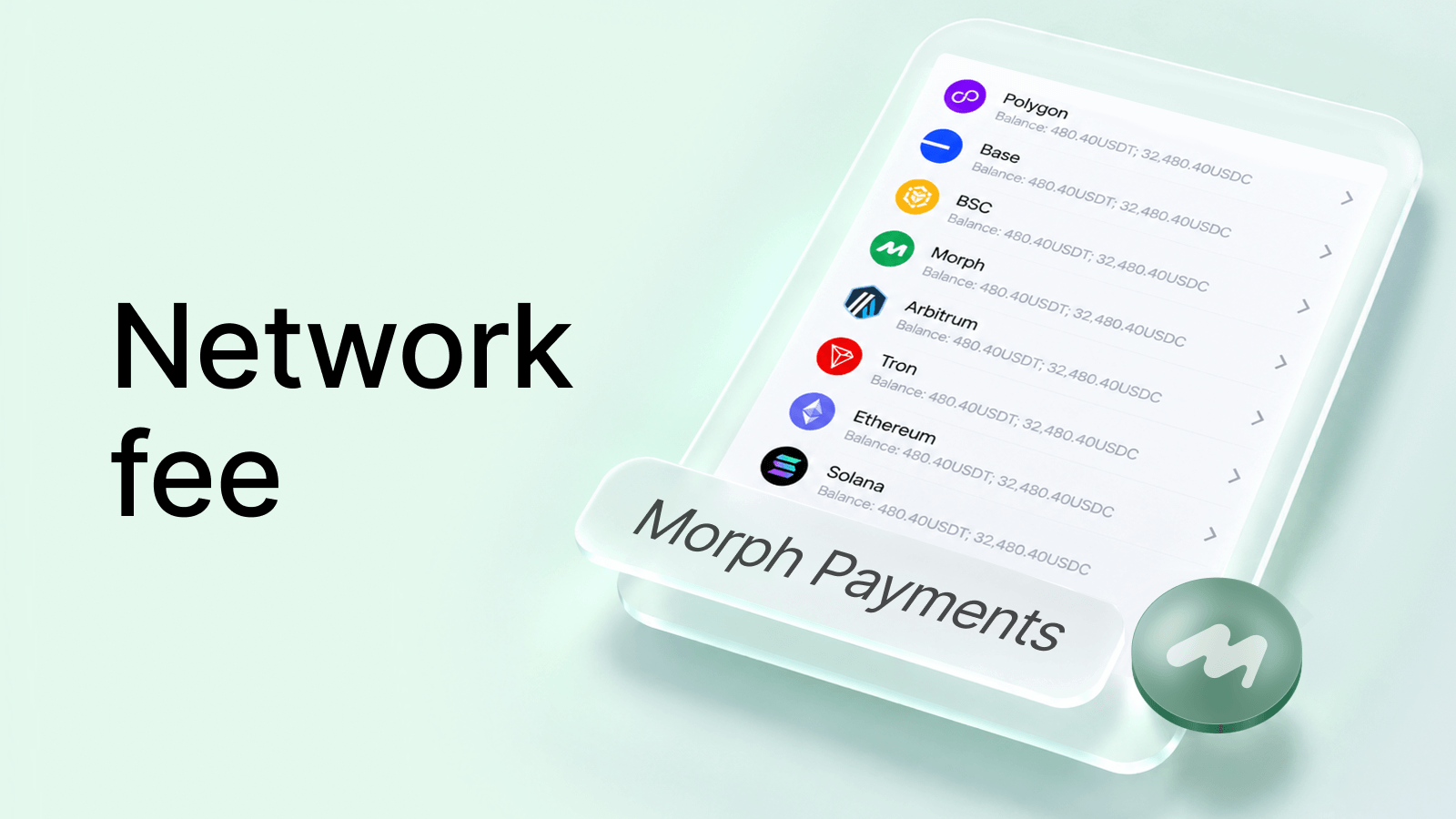
Your customer might have USDC on Polygon while you want to receive USDT on Base. Cross-chain support means they don’t need to bridge funds themselves before paying you — they pay from wherever their money is, and Morph Payments handles the routing. You receive the settled amount on your chosen chain. The whole process happens inside a single payment request.
A cross-chain service fee applies when bridging is involved. This is separate from the network fee, and it covers the cost of the cross-chain swap. Morph Payments surfaces it at checkout so the customer can see the full cost before confirming.
Why blockchain networks aren’t connected by default
Each blockchain is an independent network with its own validators, its own token standard, and its own ledger. An asset that exists on Ethereum — say, USDC — is a contract on Ethereum’s ledger. The same ticker on Polygon is a different contract on Polygon’s ledger. Moving value between them requires a bridge: a mechanism that locks or burns tokens on one chain and mints equivalent tokens on the other. This process involves multiple transactions and, typically, a small fee.
What actually happens during a cross-chain payment
When a customer pays on a different chain than your settlement chain, Morph Payments’s routing system: (1) receives the customer’s payment at the transit address on their chain; (2) initiates a cross-chain swap using bridge infrastructure; (3) delivers the settled stablecoin amount to your TEE wallet (or external address) on your chain. Each step produces its own transaction hash, all of which are recorded on the Morph Payments order. From the customer’s side, they just confirm one transaction in their wallet. From your side, the settled amount simply arrives.
The cross-chain service fee explained
The cross-chain service fee is charged when Morph Payments needs to bridge funds between chains. It covers the bridge protocol’s cost and is separate from the blockchain network fee the customer pays. The fee is shown at checkout before the customer confirms, so there are no surprises. On same-chain payments (customer and merchant on the same network), this fee does not apply — only the network fee is charged.
How to minimise cross-chain fees
Accept more chains. If you accept USDC on both Ethereum and Base, a customer holding USDC on either chain can pay without triggering a cross-chain swap. The more receiving chains you enable, the more likely a customer’s payment will settle without bridging. You can configure which chains and tokens you accept in your Morph Payments Console payment settings.
How to know if a payment was cross-chain
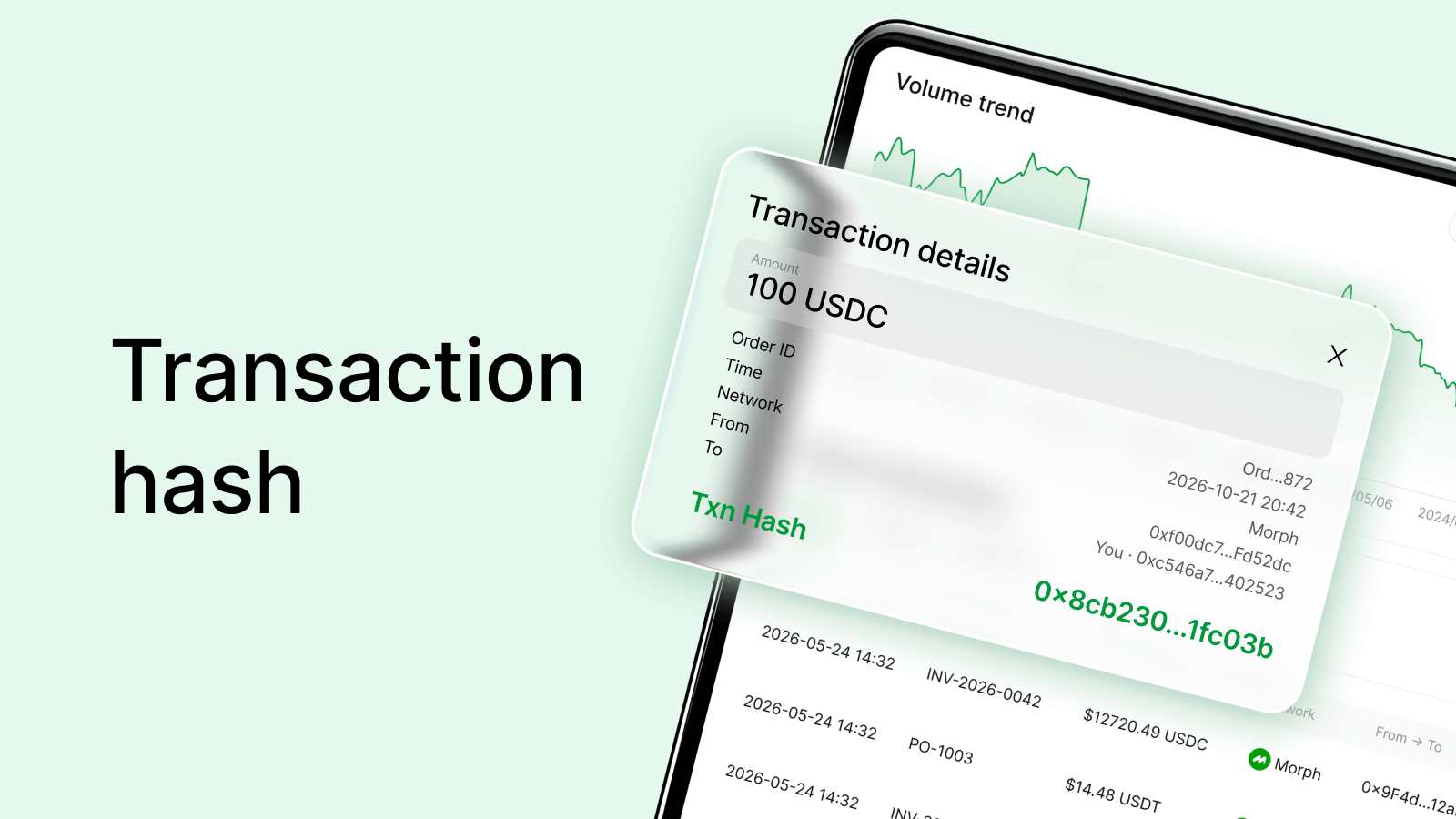
Open the order in Morph Payments Console. If the payment involved a cross-chain swap, the order details will show multiple transaction hashes — one for the customer’s send and one or more for the bridge transactions — labelled by chain. The order will also note that cross-chain routing was used. Same-chain payments show a single transaction hash.